All casesNo. 057
Panasonic Connect Cuts Drawing Checks to 10 Minutes
An in-house agent reads PDF drawings and lists mismatches; the engineer makes the call
- Case no.
- 057
- Primary source
- Company press release, press-briefing coverage, CIO interview
- Source published
- 2026-02-19
1. Why this case
Panasonic Connect is the Panasonic Group company that runs its B2B solutions business. It is headquartered in Chuo-ku, Tokyo, and its February 2026 press release gives about 29,700 employees worldwide and revenue of ¥1,333.2 billion for fiscal 2024. On 2026-02-19 it announced the internal rollout of a “Manufacturing AI agent” in its design and development department. The agent does one job that the release calls indispensable to product quality in manufacturing design: checking that the specifications written in a product drawing match those in the part drawings and the technical specification.
That check used to be done by eye. Per the company, one check took 50 minutes when the product drawing was compared with a part drawing and 340 minutes when it was compared with a technical specification. With the agent, both take 10 minutes.
The case is useful for three reasons. First, the split of work is stated plainly. The AI reads the PDFs, extracts the specification items, compares them, and produces a report. The engineer reads the report and makes the final judgment. The company’s data team said in an interview that it did not set out to fully automate the check. Second, the agent was built in-house by the company’s data team on a data platform the company had spent several years putting in place, and the interview spells out who can see the drawings and who pays for the compute. Third, the team is candid about scale: the manager who presented it calls the result the tip of the iceberg.
The sources are the company’s press releases, trade-press reports of the press briefing held with Snowflake, and an interview in CIO Japan, all in Japanese.
2. Problem
In design and development, the press release explains, checking whether the specifications in several documents agree is essential to product quality. The documents named are product drawings, part drawings, and technical specifications. A briefing report in Cloud Watch adds why: the product drawing sits at the center, many part drawings are made from it, and a gap between the two can turn into a defect in manufacturing.
The cost came in three layers.
- Hours. The release says the check relied on manual work and visual confirmation by the person in charge, and took a huge number of person-hours. CIO Japan reports that a single product can have more than ten specifications and that a technical specification can run close to 50 pages, and calls the work dependent on the individual and heavy.
- Missed checks. Manual checking carried a constant risk of human error such as a missed item.
- What a miss costs later. A missed check can cause rework in later processes, a product recall, or a repeat inspection. The release says these bring large economic loss and risk to the brand, which made the check an important management issue.
The obstacle was the file format. The drawings are PDFs, which the release calls unstructured data that is hard to automate with AI, and it says existing solutions could not solve the problem. Mynavi TECH+ reports that the drawings were stored only as PDF. At the briefing, per Cloud Watch, Panasonic Connect said no product on the market handled this, that building one from scratch was expected to be very costly, and that it was not even clear such a tool could be built.
The company’s results slide labels the old method “Excel” and the new one “Snowflake.”
Confirmed facts: documents checked = product drawing vs part drawings and technical specifications; done by hand and by eye; risk of missed items; consequences named = rework, recall, re-inspection, economic loss, brand damage; drawings stored as PDF; no off-the-shelf solution; old method labelled “Excel”; 10+ specifications per product and technical specs near 50 pages (CIO Japan).
3. Solution
3.1 What the agent does
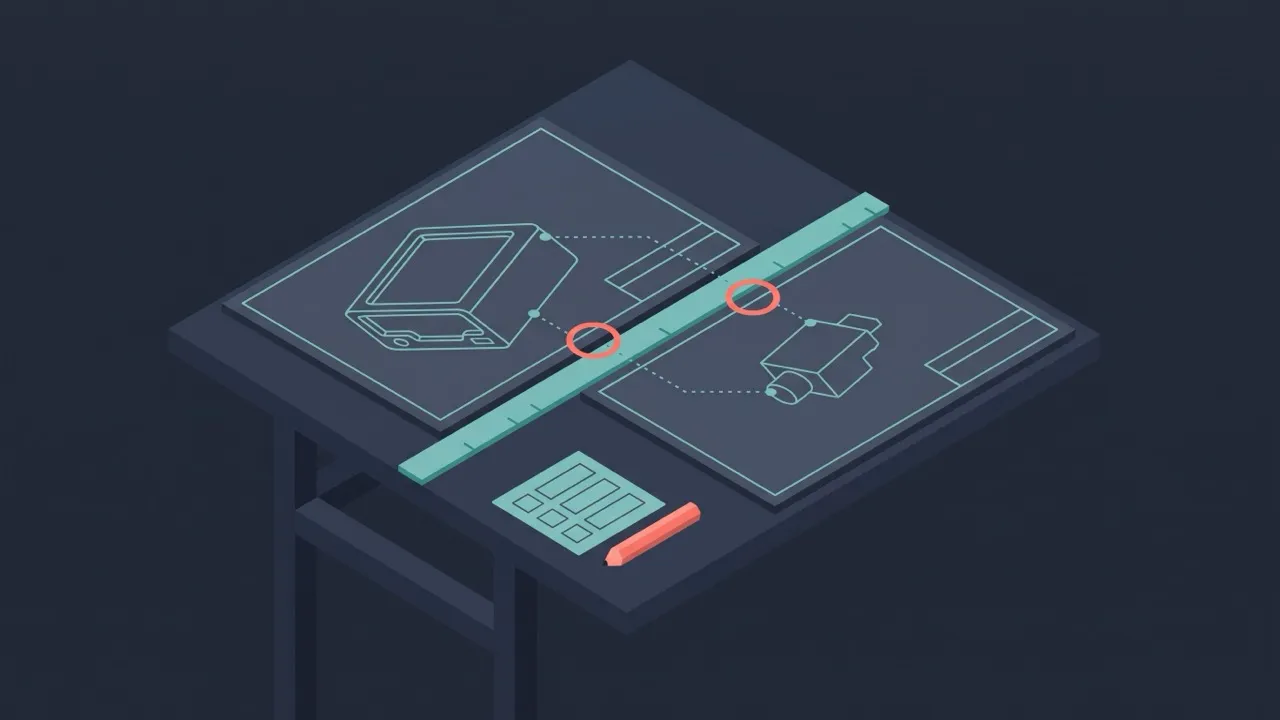
Panasonic Connect built the Manufacturing AI agent in-house on Snowflake’s data cloud platform, using Snowflake’s AI function Cortex AI. According to the release, the agent extracts text automatically from several PDF drawings. The AI then checks items such as material and finish between the product drawing and the part drawing, or between the product drawing and the technical specification, and shows the results as a list. The person in charge no longer has to lay several documents side by side.
The release lists three features:
- Analysis of unstructured data (PDF).
- Semi-automatic checking by AI: the AI checks the extracted data automatically and supports the person’s confirmation work.
- Large reductions in work time and better quality, including less variation in quality between the people doing the check, because the work is standardized.
The July 2026 release describes the same agent as one that structures drawing and design-specification information and performs the check.
3.2 The workflow and who does what
The briefing coverage and the CIO Japan interview give the steps.
- An engineer drags and drops the drawing and specification files into a Streamlit app built on Snowflake.
- Cortex AI reads the documents and extracts the needed specification information in JSON format. At the briefing, Yuta Watanabe, the data management manager in Panasonic Connect’s IT and Digital Promotion Division who presented the project, described this as text extraction plus semi-structuring.
- The AI compares the extracted items across the drawings.
- The app returns the inconsistencies as a structured report, generated automatically.
- The person checks the result. Per Cloud Watch, Watanabe said the person only has to check the results.
In the CIO Japan interview, Watanabe stressed that the team did not aim for full automation. The AI handles reading and comparison, and the final judgment is made by a person. He said the aim was not to replace people but to give them more of the time they should be spending on judgment and review.
3.3 Where it sits: agents with data, at department level
The agent is part of what the company calls the ConnectAI agent platform plan. ConnectAI is Panasonic Connect’s own AI assistant. A slide in the February release splits the plan into two tiers:
- The in-house AI platform, for all employees (12,000): personal agents and business-process agents, such as an agent that writes documents in a set format or one that drafts approval documents under fixed rules.
- Snowflake, at section and department level (dozens of people): business agents with data. The two named are the Manufacturing AI agent and a customer analysis agent.
The customer analysis agent is a separate project on the same platform. Per Cloud Watch and Mynavi TECH+, it analyzes free-text comments from the company’s annual customer satisfaction survey, and Watanabe said the work fell from 200 hours to 20 hours.
The release presents the Manufacturing AI agent as a concrete use of the company’s AI and data platform, which it calls Connect Corpus: one place for structured data such as sales and production results and for unstructured documents such as drawings, specifications, and minutes. IT Leaders reports that the company’s data used to be siloed by region, business, and value chain, and that consolidation began around fiscal 2021. CIO Japan adds that before Snowflake there was no company-wide data warehouse and about four BI tools were in use, and that moving every business unit and corporate function onto the platform took three to four years.
3.4 Access and cost
Drawings are sensitive, so the CIO Japan interview covers access. Watanabe’s team handles all permission management. Only the staff of the business unit that brought in the drawings can see them, which he described as ordinary access control. His team manages identities and permissions, and infrastructure security is left to the platform. The platform passed the Panasonic Group’s evaluation process for cloud services when it was adopted.
Cost follows the same split. Each business unit is a separate tenant on the data platform and holds its own budget and cost management. The central team still watches total cost, and where a tenant’s cost spikes, its engineers check the queries and tasks behind it.
3.5 Rollout
The release says use starts with two checks in the company’s own business: checks against standards and checks of exterior parts. The plan is to extend the agent to other checking work and raise productivity across design and development. The July 2026 release says data-linked agents will next spread to finance and sales.
Confirmed facts: built in-house on Snowflake with Cortex AI; Streamlit app with drag-and-drop input; text extraction to JSON; item comparison (material, finish named); automatic report of inconsistencies; person checks and makes the final judgment; release calls it semi-automatic; department-level agent tier (dozens of people) vs company-wide ConnectAI (12,000); access limited to the owning business unit’s staff; cost per business-unit tenant; first use = standards checks and exterior-parts checks.
4. Impact
Figures are company-reported, from the 2026-02-19 release, its results slide, and Watanabe’s remarks at the briefing. The slide states them per single task.
| Check | Before | After | Reduction |
|---|---|---|---|
| Product drawing vs part drawing | 50 min | 10 min | 80% |
| Product drawing vs technical specification | 340 min | 10 min | 97% |
The release’s headline uses the upper figure: work hours cut by up to 97%. Monoist’s headline put it at 90%. The release also says standardizing the work reduces variation in quality between the people doing it, and that the risk of economic loss from rework caused by human error is greatly reduced. No figure is given for either.
The company has not published how many checks the agent runs, how many engineers use it, total hours saved, or how often it misses or wrongly flags a mismatch.
For company-wide context only, the 2026-07-29 release reports that ConnectAI as a whole saved 788,000 hours in fiscal 2025, equal to 3.4% of total working hours, and sets a goal of cutting 10% of total working hours with AI by 2030. That figure covers all ConnectAI use, not this agent.
Watanabe is measured about the result. In the CIO Japan interview he called it the tip of the iceberg: a large amount of manual process remains, the work on the ground has not become easier at all, and the effect will not show until the approach scales much more broadly. He added that showing something that actually works raised expectations inside and outside the company and led to the next projects.
5. Insight
What moved was reading and comparing, not deciding. Before, an engineer read the product drawing and a specification that can run close to 50 pages side by side and noted differences. Now the agent reads both, extracts the items, compares them, and lists the gaps. The engineer reviews that list and decides. The release calls the checking semi-automatic and says the AI supports the person’s confirmation, which matches the interview: the AI does not make the final call.
After the change, both reported checks take the same time. The part-drawing check and the specification check both take 10 minutes, though one used to take 50 minutes and the other 340. The longer check, against the technical specification, saw the larger saving.
The data platform came first. The agent was not a separate purchase. It runs inside a Snowflake platform the company had spent several years rolling out business unit by business unit, and it uses the platform’s own AI function and app framework. A second agent, for survey comments, runs on the same platform with the same tools. Panasonic Connect said no off-the-shelf tool existed and a custom build was expected to be costly; building on an existing platform is how the data team got around that.
Governance was settled in plain terms. Drawings stay visible only to the business unit that owns them, the data team holds permissions, and each business unit pays for its own tenant. These are ordinary rules, but they are the ones that let a central team put engineering drawings into an AI pipeline.
How the team chose the work. In the interview, Watanabe and CIO Akihiko Kawano describe a policy of not building dashboards or handing over results, starting with departments that ask to take part, and getting the head of the organization involved. Kawano argued that as Japan’s workforce shrinks, a company that does not act now will not be able to sustain the work hours it needs.
Limits. All figures come from the company. The times are per check, with no volume, user count, or accuracy data. The release says the risk from missed checks is greatly reduced but gives no measure of misses before or after. Use so far covers two check types, standards and exterior parts. Watanabe himself calls it the tip of the iceberg. The page counts differ by outlet: CIO Japan says technical specifications can run close to 50 pages, while Cloud Watch describes specifications running to several hundred pages.
One-line takeaway: When a quality check is mostly reading two documents side by side, an agent can take over the reading and comparison and hand the engineer a list of mismatches to judge; in Panasonic Connect’s two reported checks, the time fell to the same 10 minutes whether the old check took 50 minutes or 340.
6. Implementation hypotheses (not in the source)
6.1 A fixed item list per check type, extracted to JSON
Basis: Cortex AI extracts the needed specification information in JSON format (CIO Japan); the release names material and finish as items; use starts with two specific checks, standards and exterior parts; the results slide labels the old method Excel.
Because the agent started with two named check types, each type probably has its own fixed list of items to extract, rather than a free-form instruction to find differences. For an exterior-parts check, the list would likely include material, finish, and the other fields an engineer already ticked off in the old Excel sheet. The extraction prompt would ask Cortex AI to return one JSON object per document with those keys, the value as written, and where on the drawing it was found. The product drawing would serve as the reference, and each part drawing or specification would be compared key by key against it. Values are likely normalized before comparison, for example spacing, full-width and half-width characters, and units, so that notation differences are not reported as mismatches. The language model probably does the reading. The comparison itself could be a simple rule over the JSON, which keeps the result repeatable when the same files are checked twice.
6.2 A report built for review, with missing values flagged
Basis: The app returns inconsistencies as a structured report; the person only has to check the results; the final judgment is made by a person; the release credits standardization with less variation between staff.
For a 340-minute check to become a 10-minute review, the report most likely lists each item with the value from each document, a match or mismatch mark, and a pointer to the page or region it came from, so the engineer can open only the disputed spots. An item that the model could not find in one document would likely be shown as needing review, not counted as a match, because a missed value is exactly the error the check exists to catch. The engineer’s decision on each flagged item, whether accepted as a real gap or dismissed as a reading error, could be written back to a Snowflake table. That record would let the team tune the item lists and prompts, and it would make every check follow the same steps no matter who runs it, which is one plausible source of the reduced variation between staff.
6.3 Drawings and costs held inside each business unit’s tenant
Basis: Only staff of the business unit that brought in the drawings can see them; the data team manages identities and permissions; each business unit is a tenant with its own budget; the team checks queries and tasks when cost spikes.
The uploaded PDFs and the extracted JSON were likely stored in the business unit’s own area of the platform, with access granted by role. The Streamlit app would then run under the engineer’s role, so it could only list and read drawings that role may see, and no extra access layer would be needed inside the app. Cortex AI calls would be billed to the business unit’s tenant. A technical specification near 50 pages costs more to process than a single part drawing, so a business unit that suddenly runs many long specifications is the kind of spike that would prompt the team to look at the queries and tasks behind it.
7. Sources
- Panasonic Connect — press release (Japanese): Panasonic Connect begins using its in-house Manufacturing AI agent for drawing and design-specification checks (title translated)
https://news.panasonic.com/jp/press/jn260219-1
2026-02-19 (accessed 2026-11-17) - Panasonic Connect — press release (Japanese): Panasonic Connect cuts total working hours by 3.4% with AI, aims for 10% by 2030 as it expands AI agents (title translated)
https://news.panasonic.com/jp/press/jn260729-1
2026-07-29 (accessed 2026-11-17) - Cloud Watch (Impress) — report of the Snowflake and Panasonic Connect press briefing (Japanese): “No AI strategy without a data strategy”: Snowflake and Panasonic Connect on the core of manufacturing DX (title translated)
https://cloud.watch.impress.co.jp/docs/news/2087881.html
2026-02-24 (accessed 2026-11-17) - MONOist (ITmedia) — (Japanese): Panasonic Connect uses Snowflake’s AI functions to cut design-specification checks by 90% (title translated)
https://monoist.itmedia.co.jp/mn/articles/2602/25/news031.html
2026-02-25 (accessed 2026-11-17) - Mynavi TECH+ — (Japanese): Panasonic Connect cut drawing-check time by up to 97% with an AI agent: four keys to success (title translated)
https://news.mynavi.jp/techplus/article/20260226-4167718/
2026-02-26 (accessed 2026-11-17) - IT Leaders (Impress) — (Japanese, page 1): Panasonic Connect uses AI to streamline drawing and product-specification checks, cutting work time by up to 97% (title translated)
https://it.impress.co.jp/articles/-/29019
2026-02-20 (accessed 2026-11-17) - CIO Japan (Foundry) — interview with CIO Akihiko Kawano and Yuta Watanabe (Japanese): From “procurement broker” to partner: Panasonic Connect’s CIO on turning into an organization where AI works (title translated)
https://www.cio.com/article/4230303/
2026-10-14 (accessed 2026-11-17)