All casesNo. 069
Dos Pinos Hands Its Label Checks to an AI Inspector
A Copilot Studio agent compares labels with spec sheets; the designer decides every fix
- Case no.
- 069
- Primary source
- Microsoft Source LATAM feature (English and Spanish editions)
- Source published
- 2026-05-14
1. Why this case
Dos Pinos is a Costa Rican dairy cooperative based in Alajuela and, in the words of Microsoft’s feature, “one of Central America’s largest dairy cooperatives.” It has about 6,000 employees, and its milk, “some 1.3 million liters per day,” comes from “roughly 1,500 member farms, many of them small and medium-sized producers.” Its operations run from dairy production and packaging to agro-industrial services, logistics, and retail distribution.
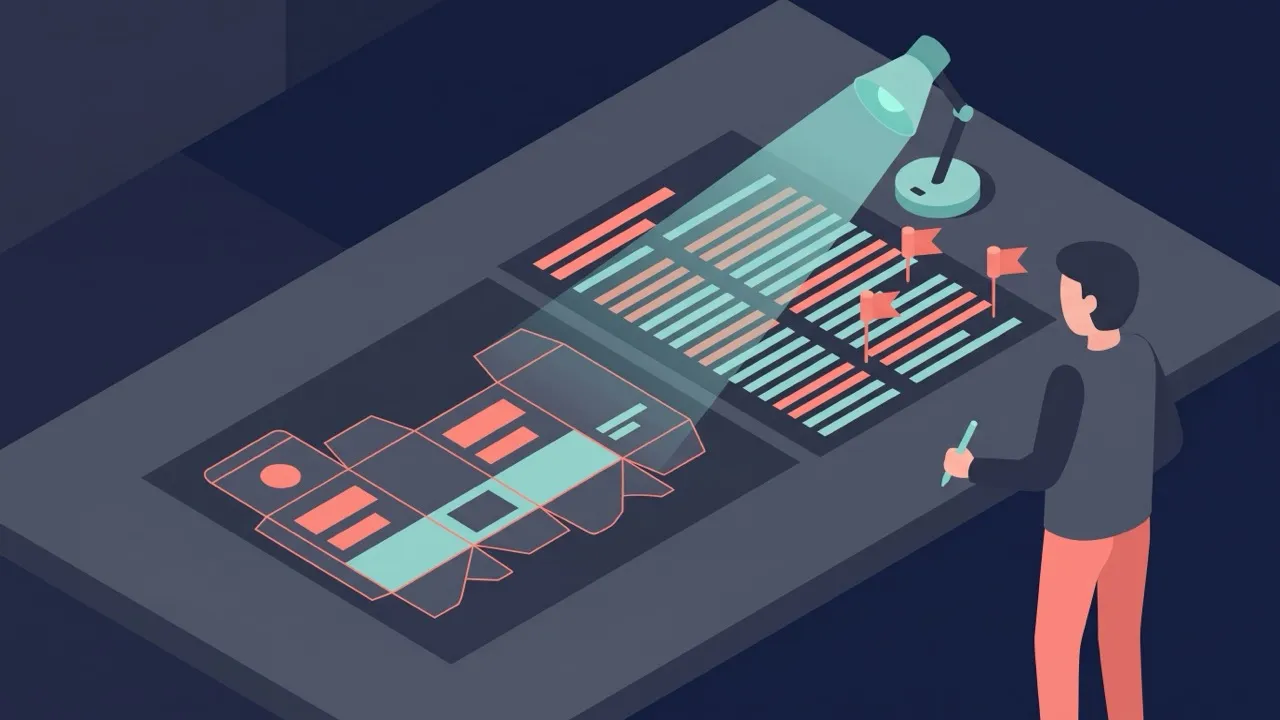
The cooperative says it has deployed around 80 AI agents across functions. The clearest of them is a packaging “AI inspector” that the design department’s creative lead, Jhojan Rodríguez, built himself in Microsoft Copilot Studio. It replaced the most stressful part of a packaging redesign: reading nutritional tables line by line to find a number that does not match or a comma that is missing. The agent compares the label artwork with the internal technical sheet and flags discrepancies. It changes nothing on its own. The designer reads its analysis and makes the corrections.
The case is useful for three reasons. The person who owned the work built the agent, by writing about 250 words of instructions. The error it targets is narrow and well defined: regulatory and nutritional data on a label must match a source document exactly. And the company ties the inspector to an operational result, more than 50% fewer inconsistencies in the design stage, which it says helped cut average time to market by roughly 10 days. The same feature describes a sales analyst who used Copilot as a coach to automate a four-hour morning reporting routine, and an “AI ambassadors” program that spreads this kind of self-built automation. All figures are company statements reported in a Microsoft-published feature.
2. Problem
2.1 Label errors were in the data, not the design
Before the agent, checking a new package meant “scanning dense nutritional tables line by line—looking for a mismatched number or a missing comma.” “For us, the errors were never about the graphic aspect,” Rodríguez says. “They were in the nutritional and regulatory information. And those must be precise down to the millimeter.”
The feature explains why small errors matter at Dos Pinos’s scale. In a business “where margins are tight, competition is strong and regulatory scrutiny is constant,” a packaging mistake “can delay manufacturing and push back product launches; incorrect nutritional declarations can trigger legal and reputational risks, including potential recalls.”
2.2 An analyst’s morning went to report distribution
In sales, Randall Benavides spent his mornings on manual distribution: “downloading revenue data, filtering spreadsheets and emailing Microsoft Excel reports to clients one by one. Delivering up to 21 daily reports to more than 100 internal users took about four hours each morning.” “I was spending four hours a day just processing data,” he recalls. “That’s not what you expect when you hear the word ‘analyst.’”
2.3 Cost pressure across a mass-market business
The CIO, Alejandro Arguedas, frames AI adoption as a competitive necessity: “We operate in a mass consumer market, and there is no doubt there is enormous pressure around costs, automation, service, process transformation and product quality. We want to maintain our leadership and become even stronger.”
Confirmed facts: about 6,000 employees; about 1,500 member farms; about 1.3 million liters of milk per day; label checks were manual, line by line; label errors were in nutritional and regulatory information, not graphics; packaging errors can delay manufacturing and launches, and wrong nutritional declarations can lead to legal and reputational risk including potential recalls (stated as risks); one analyst delivered up to 21 daily reports to more than 100 internal users in about four hours each morning.
3. Solution
3.1 The packaging inspector
Rodríguez built the agent in Copilot Studio. According to the feature, he “defined the task in about 250 words, with clear instructions for how the agent should evaluate information.” The agent “compares packaging labels against internal technical sheets and highlights discrepancies before files leave the design team.” It launched in late 2025.
The workflow is short. When a redesign arrives, the designer on Rodríguez’s team “runs a prompt through an AI agent Rodríguez built himself. Seconds later, it flags any discrepancies between the technical documentation and the final label.” The feature gives a recent example: for an updated powdered milk package, the designer uploaded “both the technical specifications and the proposed artwork.” The agent “produced a detailed comparison, identifying discrepancies and recommending corrections based on internal parameters—from incorrect figures to formatting inconsistencies.”
The split of work is explicit. “The tool does not make changes automatically; instead, it provides a detailed analysis for designers to act on.” Rodríguez describes the aim as taking out one part of the job, not the job. “This isn’t about replacing our designer,” he says. “It’s about removing the most mechanical, error-prone part of the job so she can focus on design quality.”
3.2 Report distribution learned from Copilot
Benavides’s fix was not an agent. After an internal AI workshop, he “turned to Copilot for guidance on automating report distribution through Power BI Service,” Microsoft’s cloud platform where staff publish and share reports. He used Copilot “as a coach to learn step by step how to send sales reports through Microsoft Outlook via Power BI Service.” “I knew nothing about AI. I told Copilot, ‘I don’t know this tool—guide me step by step.’ And it worked,” he says. “The workload eased up a lot.”
The feature treats this as one pattern in the cooperative: “In some cases, employees use Copilot Chat as a learning tool to automate existing internal processes.”
3.3 A catalogue of narrow agents
Over the past year, Dos Pinos has built “a growing ecosystem of narrowly scoped AI agents,” developed with Microsoft 365 Copilot, Copilot Chat, and Copilot Studio. The Spanish edition says they were built mainly with Microsoft 365 Copilot and Copilot Chat, with Copilot Studio in addition. The agents are “designed to mirror specific roles and tasks inside the cooperative.”
Besides the packaging inspector, the feature names agents that support the creation of non-disclosure agreements, IT service request handling, risk documentation management, and a “virtual veterinarian” that “recommends livestock products to vendors across retail locations.” The company puts the total at around 80, spanning “packaging review and legal drafting to risk assessments and client engagement.” The AI team, led by head of AI Argenis Matarrita, is working on “new agents to optimize delivery processes and systematize information from manufacturing facilities.”
3.4 Rollout and ambassadors
Dos Pinos “has rolled out Copilot to more than 1,000 employees in an initial phase, with plans to expand across the entire organization throughout 2026.”
To spread use, it created an “AI ambassadors” program: “a group of 15 employees and counting, who act as champions within their departments and help train colleagues on AI fundamentals.” The Spanish edition dates the group of 15 to 2025 and says executives expect it to keep growing. The program is meant “to encourage and equip employees across roles to build their own agents.” Benavides is one of the ambassadors and now “supports other teams in expanding Copilot adoption.”
“What we’ve learned is that this doesn’t have to be complex,” Matarrita says. “With good prompts and the right information, you can build something useful very quickly.”
Confirmed facts: inspector built in Copilot Studio by the design department’s creative lead; about 250 words of instructions; inputs are the technical specifications and the proposed artwork; output is a detailed comparison with discrepancies and recommended corrections; no automatic changes, designers act on the analysis; check happens before files leave the design team; launched late 2025; sales report distribution automated through Power BI Service with Copilot as a step-by-step guide; around 80 agents (company figure) built with Microsoft 365 Copilot, Copilot Chat, and Copilot Studio; named agents for NDAs, IT service requests, risk documentation, and a virtual veterinarian; Copilot rolled out to more than 1,000 employees in an initial phase, organization-wide planned through 2026; 15 AI ambassadors (2025, per the Spanish edition).
4. Impact
All figures are Dos Pinos statements in the Microsoft feature dated 2026-05-14. No baseline counts or before-and-after durations are published.
| Area | Figure or statement | Basis |
|---|---|---|
| Design-stage inconsistencies | Down by more than 50% | “Since the packaging agent was implemented … Dos Pinos says” |
| Average time to market | Roughly 10 days shorter | The inconsistency reduction is described as “helping reduce” it |
| Label-to-spec inconsistencies | “reduced to nearly zero” | Since the agent’s launch in late 2025 |
| Sales report distribution | Up to 21 daily reports to 100+ internal users took about four hours each morning before | No after-time figure |
| Copilot rollout | More than 1,000 employees | Initial phase; organization-wide planned through 2026 |
| AI agents | Around 80 | Company figure |
| AI ambassadors | 15 | “and counting”; dated 2025 in the Spanish edition |
“In production terms, 10 days is a huge amount of time,” says Carlos Sandí, head of IT strategy and digital transformation. “Cutting that from the cycle makes us far more operationally agile.”
The feature also states that the inspector improved workflows and is “significantly lowering the risk of regulatory penalties.”
For the people involved, the change is described in terms of attention. Benavides “now focuses on data analysis and building indicators, as well as developing new Power BI dashboards, thanks to the time freed up from data processing.” “Work flows better,” Rodríguez says. “It’s given me a lot of peace of mind. Now we can focus on the creative side with confidence.”
5. Insight
The check moved; the decision stayed. Before, a designer read every number on a nutritional table against the technical documentation. Now the agent does the reading and comparison and returns a list of discrepancies with recommended corrections. The designer still decides what to change, and the agent does not edit the file. That split fits a task where the source of truth is a document the company already controls and the error types are known: a wrong figure, a missing comma, a formatting slip.
The builder was the person who owned the risk. The design lead, who knew which errors mattered, built the inspector himself by writing about 250 words of instructions. Matarrita’s line, “With good prompts and the right information,” describes the two inputs that made this work: a precise task definition and an authoritative technical sheet.
Placement before hand-off is what links the check to time to market. The agent runs “before files leave the design team.” An error caught there does not travel on to manufacturing, where the feature says packaging mistakes delay production and push back launches. That fits the company’s claim that fewer design-stage inconsistencies helped cut about 10 days from average time to market.
Not every win needs an agent. The sales report change used Copilot as a tutor to set up an existing Microsoft tool, Power BI Service, for distribution. The automation itself is a reporting feature. The AI’s role was to teach an analyst who “knew nothing about AI” how to configure it.
Ambassadors carry the method across departments. With Copilot at more than 1,000 employees in a first phase and an organization-wide rollout planned, the cooperative relies on 15 ambassadors in departments to train colleagues and help them build their own agents. Benavides moved from user to ambassador.
Limits. Every figure comes from Dos Pinos through a Microsoft-published feature, not an independent review. The feature gives two descriptions of the inspector’s effect, label inconsistencies “reduced to nearly zero” and design-stage inconsistencies down by more than 50%, without baselines and without saying how they relate. The 10-day reduction is credited partly to the inspector (“helping reduce”) with no starting time-to-market figure. The 80 agents are not listed beyond five examples, and there are no usage, accuracy, or cost figures for any of them. The sales analyst’s time after automation is not stated.
One-line takeaway: A narrow agent, written by the person who owns the error, that compares two documents the company already trusts and leaves every correction to a person, can cut design-stage errors without changing who makes the decision.
6. Implementation hypotheses (not in the source)
6.1 A field-by-field comparison defined in the 250-word instruction
Basis: Rodríguez “defined the task in about 250 words, with clear instructions for how the agent should evaluate information”; the designer uploads “both the technical specifications and the proposed artwork”; the output identifies discrepancies “from incorrect figures to formatting inconsistencies” and recommends corrections “based on internal parameters.”
Two hundred and fifty words is enough for a checklist, not for embedded reference data. The instruction most likely tells the agent which fields to read from the technical sheet (the nutritional values and the regulatory statements), where to find each one on the artwork, and how to report a mismatch: the field, the value in each document, and the suggested correction. The “internal parameters” are probably formatting rules written into the same instruction, such as decimal separators, units, and required wording, which is how a missing comma becomes a flagged item rather than a judgment call. Because each run takes two uploaded files, the agent probably works one package at a time in a chat session rather than watching a shared folder. The designer would then work through the list, fix the artwork, and re-run the check before the files leave the team, so the agent’s output acts as a sign-off step inside the design department.
6.2 Scheduled report delivery through Power BI Service
Basis: Before, the analyst was “downloading revenue data, filtering spreadsheets and emailing Microsoft Excel reports” one by one, “up to 21 daily reports to more than 100 internal users”; he learned “how to send sales reports through Microsoft Outlook via Power BI Service.”
The filtering step suggests that recipients received different slices of the same revenue data. In Power BI Service, that is usually handled by publishing one report with a refreshed dataset and sending it on a schedule through email subscriptions, with filters or row-level rules deciding what each recipient sees. The up to 21 daily files would likely collapse into a smaller number of published reports, each with a subscription list, delivered through Outlook after the morning data refresh. The analyst’s remaining job in this flow would be maintaining the report definitions and recipient lists, which matches the feature’s description of him now building indicators and new dashboards instead of producing files.
7. Sources
- Microsoft Source LATAM — A Costa Rican dairy cooperative turns AI agents into coworkers (Juan Montes)
https://news.microsoft.com/source/latam/features/ai/costa-rica-dos-pinos-ai-agents-microsoft-copilot-en/?lang=en
2026-05-14 (accessed 2026-11-17) - Microsoft Source LATAM — Una cooperativa lechera de Costa Rica convierte agentes de IA en compañeros de trabajo (Juan Montes, Spanish edition)
https://news.microsoft.com/source/latam/features/ia/costa-rica-dos-pinos-agentes-ia-microsoft-copilot-es/
2026-05-14 (accessed 2026-11-17)